


nuance briefs exist to help readers think clearly and talk intelligently about a trending topic in about 500 words
Let’s break down the collapse of American political media. Legacy outlets are bleeding trust while independent voices — podcasters, Substackers, and YouTube commentators — fill the vacuum. This is a quick breakdown to help you think more clearly about the waters you’re swimming in, and what to do about it.
what happened
Trust in American mass media has been near historic lows for years, and the 2024 election accelerated the freefall. High-profile editorial decisions, perceived inconsistencies in coverage, and explosive independent voices drew tens of millions of people away from traditional news.
The landscape is fracturing and reorganizing around something new — but that new thing has its own problems.
the two sides
SIDE 1: ”Legacy media is hopelessly, irredeemably biased.”
This camp has been saying this for years and feels vindicated. Corporate ownership and an incentive structure that rewards engagement over accuracy have produced outlets that feel less like truth-seekers and more like ideological actors. The audience that felt lied to for years left for new voices, and for good reason.
SIDE 2: “Independent media is just more bias without any obligation to the facts.”
The establishment defense is that at least legacy outlets have editors, reputations, and something to lose. Real skin in the game. Podcasters and independent commentators have none of that — just huge audiences, ad revenue, and unlimited freedom to say whatever keeps people coming back. You need zero journalistic chops to play the game.
the nuance
The bias is real, but “bias” isn’t the best diagnosis.
Every outlet that depends on audience attention gets shaped by whatever that audience rewards. The problem isn’t journalistic opinions (they’ve always had them), it’s that the economic model punishes complexity and rewards heated takes. That’s a structural failure more than a choice made by individual outlets or writers.
Independent media inherited the same incentive problem
Podcasters aren’t free from that same pressure. The host who moderates their takes gets fewer downloads, a quieter comment section, and lower revenue. The pull toward telling your audience what it wants to hear doesn’t disappear without the typical corporate dynamics. If anything, it intensifies.
More voices doesn’t mean better information
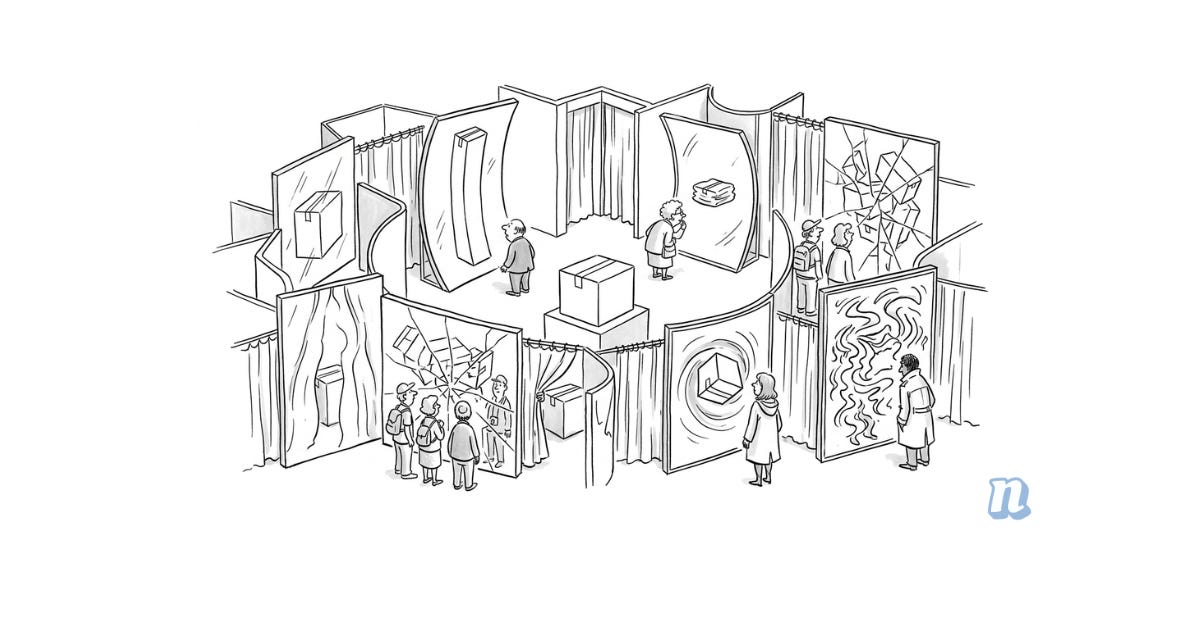
It’s tempting to say more information = more truth. But the explosion of information sources just expanded the options for confirmation bias without expanding clarity. The modern media landscape makes it possible to construct an entirely custom reality. That’s the real problem: truth comes from friction with other views, and we’ve lost it.
Your media diet is your identity.
The outlet you trust, the podcaster you follow, and the feeds you’ve built are woven into how you see the world and who you talk to about it. Your friends are right there with you. That’s what makes the bias so hard to see and so costly to confront. Changing your information diet isn’t just a preference update, it’s a socially risky move.
the real question
What does it actually mean to be informed in an ecosystem built to move you?
There’s no clean solution on the supply side. The dream trustworthy outlet, one without bias or financial pressure to capture your attention, will never exist. The environment is what it is. Objectively messy and structurally incentivized against nuance.
Which means the work is on you. To me, that’s good news.
The people who come out of this moment with real clarity are the ones learning to triangulate. To sit with uncertainty, to ask questions, and take ownership over their worldview. To notice when they’re being convinced, rather than informed. It’s a skill, and it compounds.
Think for yourself.
j