


the nuance provides civic literacy at the speed of culture, helping you find your place in the American project, starting with the fundamentals.
TODAY’S REP: Antitrust and why it matters
Antitrust refers to the set of laws designed to keep any one company from getting big enough to crush its competition.
Congress passed the first law — the Sherman Act — in 1890 to deal with Standard Oil and the railroad monopolies of that era (think Robber Barons from middle school). It was used to break up Standard Oil in 1911 and AT&T in the 1980s.
After that, big antitrust cases against major U.S. firms went pretty quiet.
Now, though, we’re in the most aggressive enforcement push in a generation.
Fast (recent) facts:
A federal court ruled Google an internet search monopoly in August 2024.
Meta went to trial in 2025 — and won. A federal judge ruled the company doesn’t hold a monopoly because it competes with TikTok and YouTube, not just Instagram and Snapchat.
Amazon’s trial is set for late 2026, and the Department of Justice’s (DOJ) case against Apple is moving toward trial.
Here’s the bigger trend line to note, though. Despite losing two antitrust rulings, Alphabet (Google) passed Apple in January 2026 to become the second most valuable company on Earth, worth around $3.9 trillion. The fixes the government asked for got waved off.
The takes on this split three ways.
→ Some say it’s finally working.
→ Some say it’s theater.
→ And some say it shouldn’t be happening at all — that punishing companies for being big and good at what they do hurts innovation, hurts consumers, and weakens American firms in a global competition with China.
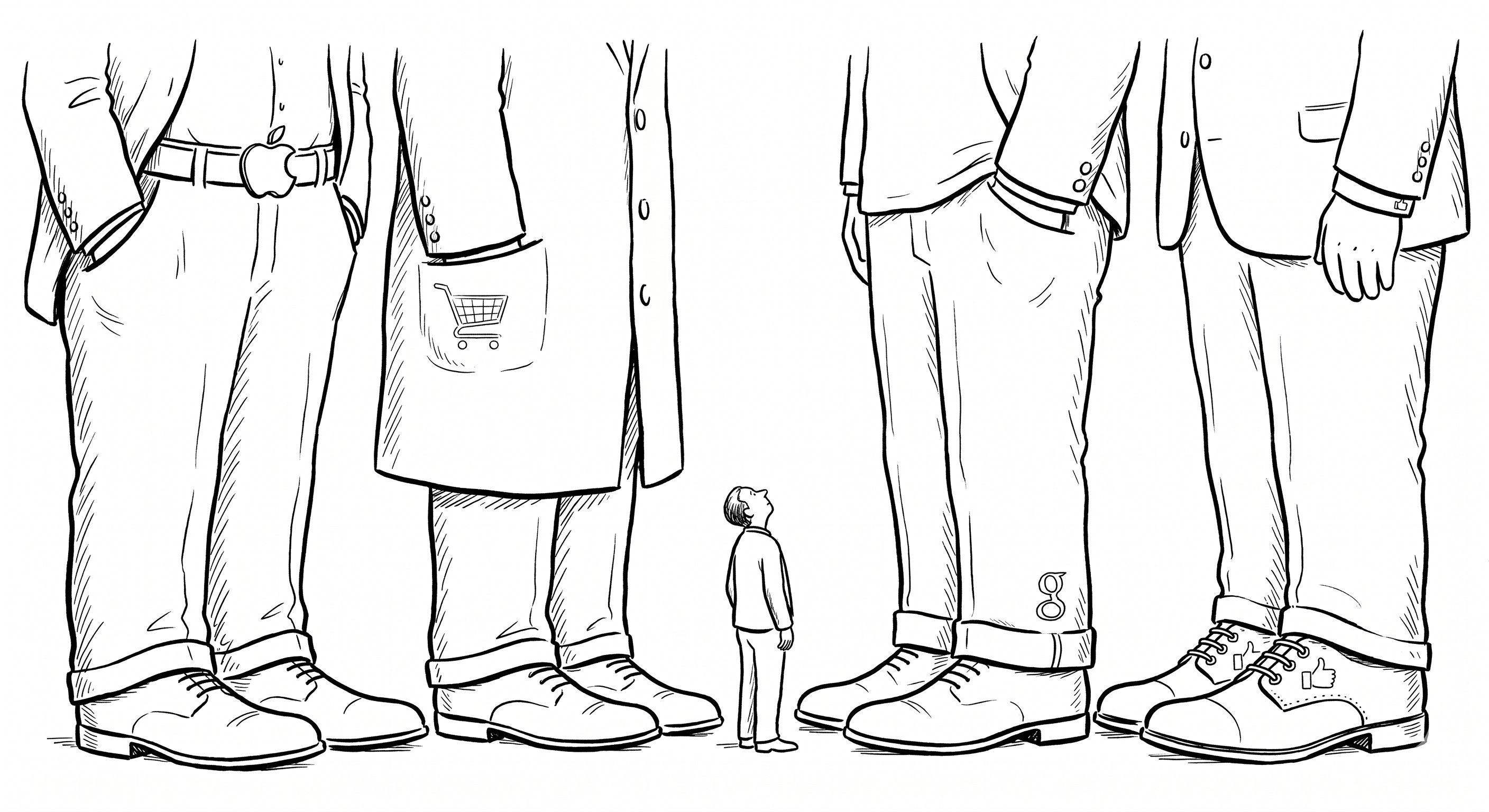
The question is what this means for you. Antitrust is the rule that decides whether the companies running your search, your feed, your shopping, and your inbox have any real check on their power.
If not, the bigger they get, the less leverage you have over the rails of your own life.
the mechanism underneath: the consumer welfare standard
U.S. antitrust law was written broadly on purpose. The Sherman Act (1890) intentionally didn’t define monopoly too tightly so it could flex with the times.
Then in the late 1970s, the Supreme Court narrowed the lens by centering antitrust on one question: does this harm consumers, primarily through higher prices? That’s called the consumer welfare standard, and it dramatically narrowed what counts as “anticompetitive harm.” Successful antitrust cases became much rarer as a result.
Google search is free. Facebook is free. YouTube is free. Through the strictest reading of the consumer welfare standard, these companies aren’t harming consumers, even if they own the entire game.
So now, prosecutors have to define harm in ways the standard wasn’t built to recognize: things like control of attention, suppression of competitors, choke points on the digital economy. Some courts are taking that argument, but most are still cautious.
the nuance
Getting this far is a surprise. Twenty years ago, the government wasn’t bringing cases like these. The political will wasn’t there.
Today, the DOJ has won two against Google, and the Federal Trade Commission (FTC) has Amazon and Apple lined up. The agencies are working harder than they have in decades. They’re trying.
But “winning” an antitrust case doesn’t mean what it used to. Standard Oil in 1911 became 34 separate companies. AT&T in 1984 became seven separate regional phone companies.
Those were structural fixes — literally splitting the company into pieces. What we’re getting in 2026 is more like behavioral fixes. The court tells Google “don’t do these specific things anymore,” while keeping the company intact. Much weaker.
The law was written for an economy we don’t live in anymore. The Sherman Act was built for railroads and oil — physical pipes you could break up by separating the assets. Tech monopolies run on data and network effects (the more people use a platform, the more valuable it gets).
You can split a company on paper, but the real engine of its power stays where it is. The “breakup” mechanism of old doesn’t translate cleanly to the thing we’re trying to solve.
So what: The fight is moving to where the law is actually being written. In 2024, the EU’s Digital Markets Act started enforcing rules on the biggest tech platforms in advance — instead of suing each company one at a time, the law just says: if you’re this big, here are the things you can’t do.
The U.S. has nothing like it at the federal level. Right or wrong, the next chapter of antitrust may be driven outside U.S. courtrooms.
the real question
If a company can lose two federal antitrust rulings and grow to the second-largest in the world, the easy read is that the system is broken. The harder read is that the system is doing exactly what we built it to do.
So the right question is: were the laws we’re using ever going to be enough for the kind of power we’re trying to check? And if not, who’s writing the next ones?
what this means for you
We’re all well aware of the impact these companies have on our lives. And if you aren’t, I’ll spell it out: four companies run most of the basic infrastructure of modern life.
Google handles about 90% of global search.
Apple sits in more than 60% of U.S. pockets.
Meta’s apps reach over 3 billion people every day — close to half the planet.
Amazon takes roughly a third of every dollar Americans spend shopping online.
One company per layer of how you navigate, find information, talk to people, and buy stuff.
It’s worth caring about.
Scott Galloway (one of my faves) recently launched a consumer protest called Resist and Unsubscribe — a coordinated, month-long pullback on subscriptions to roughly ten Big Tech companies, in response to the Trump administration’s handling of immigration enforcement.
The thesis is simple: this president (and Big Tech) responds to markets, full stop. Cancel the subscriptions, the market caps wobble, and the political calculus shifts. Galloway estimates the campaign has shaved a quarter-billion in market cap so far. A real number, but against trillion-dollar companies, underscores the point about how big these things have gotten.
It gets at the margins. They’re just truly so big.
Honestly, I don’t have an inflammatory opinion here. The way I see it, I appreciate what these companies let me do every day. But I’m also someone who wants this to work through legal channels, so a solution can be sustained through time.
But right now, the law as written has grown insufficient.
Which means the real action is at the state level and in Europe. New York, California, and Texas are starting to move on to algorithmic pricing and app store rules. The EU is enforcing the Digital Markets Act in real time, and it seems other countries are watching.
That’s where the next decade of this gets decided. Pay attention to the laws being drafted, not just the verdicts.
Stay up.
j
go deeper
Read the DOJ recap of the actual Google search ruling here.
Learn how the consumer welfare standard works — the FTC’s own primer is the cleanest explainer.
See what new-style antitrust looks like in practice via the European Commission’s Digital Markets Act portal
If you want to go deeper — Lina Khan’s 2017 paper Amazon’s Antitrust Paradox is the document that drove the recent enforcement push. Extremely long and dense, use your fav. AI model.